

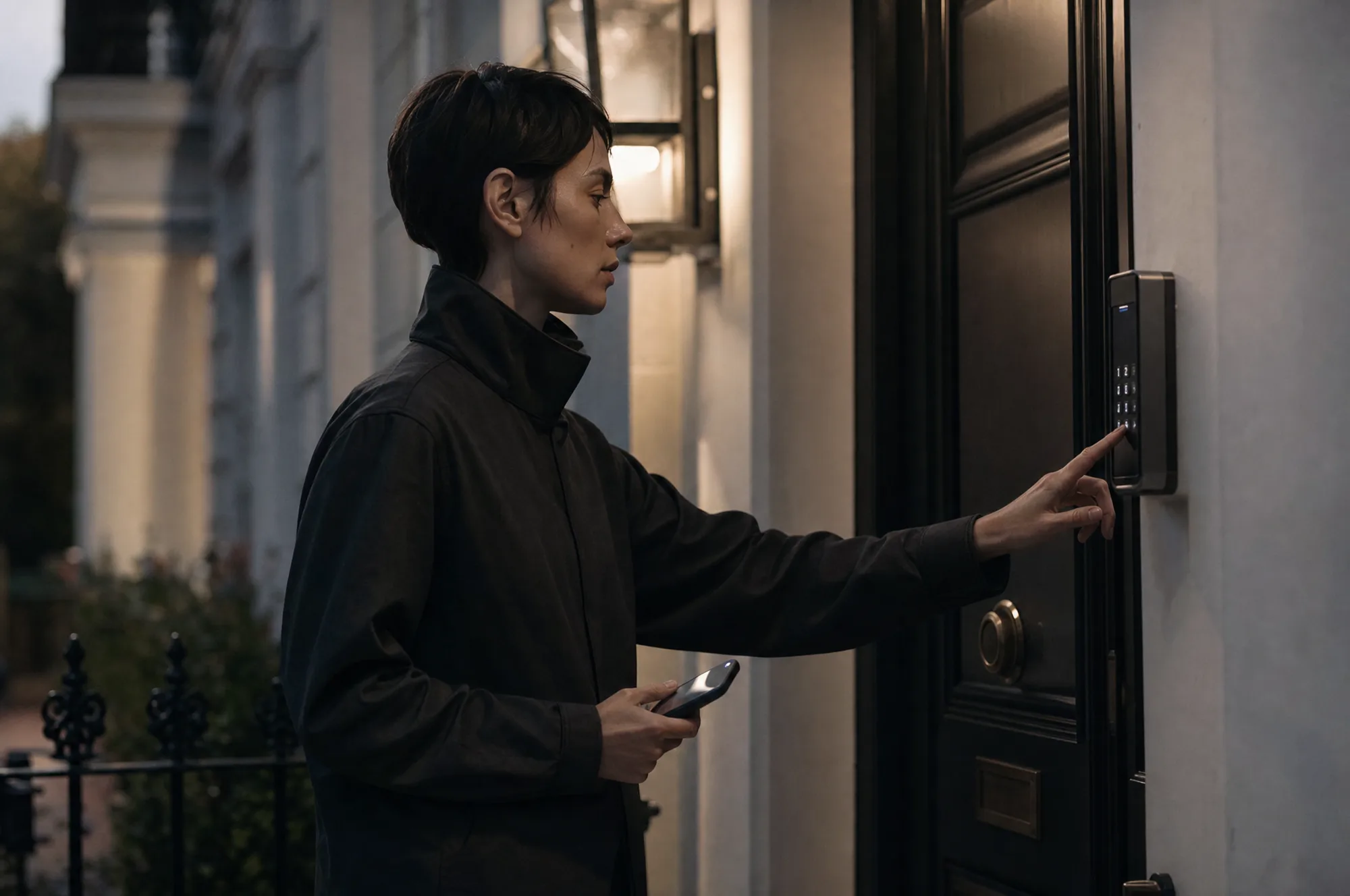
Every branch has the drawer. A jumble of keys on fobs, some labelled, some not, a few that no one can quite place. It works right up until it doesn't - a key goes missing, a property is accessed by someone who shouldn't have, or a landlord asks the one question you can't answer: who has been into my property, and when? Key handling is unglamorous, and it's exactly where serious liability hides.
Keys are access, and access is risk
A key isn't a small object to be casually managed. It's the ability to enter a home - sometimes an occupied one. Treat it loosely and you've created an open-ended security exposure that you can't see, can't measure, and can't easily close. The risks stack up quietly: a copied key with no record, a key-safe code shared by text and never changed, a contractor handed keys "for the day" who's still holding them a fortnight later.
When something goes wrong, the cost isn't the £4 to cut a replacement. It's the locksmith call-out, the lock change, the insurance complication, and the landlord who no longer trusts you with their property - multiplied by the doubt over which other keys in the drawer have the same problem.
The questions a proper system must answer
You don't have a key-handling system; you have a key-handling problem, until you can answer all of these instantly:
- Where is this key right now? In the safe, with a named person, or at the property.
- Who has held it, and when? A chain of custody, not a vague memory.
- Who accessed the property, at what time? Tied to a named individual, not "one of the lads."
- How do we revoke access cleanly? Codes that change, keys that come back, accounts that close.
If you can't say who entered a property last Tuesday, you don't control access to it - you just hope nobody asks.
Key-safes help, but only with discipline
Key-safes solve the logistics of handover but introduce their own failure mode: the code. A code shared widely and never rotated is a master key handed to everyone who's ever had it - former contractors, past tenants, the person they passed it to. The discipline that makes a key-safe safe is rotating codes after access and recording who was given each one. Without that record, a key-safe is convenience without control. The same logic applies to the spare sets in the office: a master drawer the whole branch can reach undoes every careful control around it.
Audited access as the default
The better model is to make every instance of access produce a record automatically. When a named Seeker attends a property, the visit logs itself: who, where, when in, when out. Key collection and return are tracked against named individuals. Codes are managed, not memorised. The audit trail isn't something you assemble in a panic when a landlord queries it - it already exists, because the system can't do the job any other way.
This is also where on-demand cover quietly outperforms the drawer. A Seeker collecting a key for a single inspection is a closed loop with a timestamp at each end, rather than a key that drifts out of the office and into uncertainty.
How Seeky handles access
Every Seeky job is tied to a named individual and runs through arrival check-in and automatic check-out, so each visit produces its own access record by default. You can show a landlord exactly who entered their property and when, without trawling a diary or interrogating staff. Key handling stops being the drawer you don't want to think about and becomes an auditable trail you can stand behind - the same way our safety controls are built into the flow rather than bolted on.
Access to someone's home should never be untracked. Make every entry leave a record, and the difficult questions answer themselves. See how Seeky keeps every visit accountable.
See how Seeky covers your branch
Hand-picked Seekers handle the viewings, inspections and visits you can't staff - at a price you see before you book.
Seeky for agents