

Meeting a stranger alone, at an empty property, often after dark, is part of the ordinary working day in estate agency. It shouldn't be the part nobody talks about. Surveys repeatedly find that only around a fifth of agents feel genuinely safe carrying out viewings - and that's a number worth taking seriously.
The risk is real, and it's routine
Lone working in property isn't an edge case. It's the default. A negotiator drives to a vacant house, opens up, and shows round someone they've never met, with no colleague present and often poor mobile signal. Most viewings pass without incident, but "most" is doing a lot of work in that sentence, and the cases that go wrong can go very wrong.
When fewer than a quarter of people doing a job feel safe doing it, that's not individual nervousness. It's a structural gap between the risk a role carries and the protection wrapped around it. And it falls hardest on the people most often sent solo to evening and weekend viewings.
It's also a legal duty, not just good practice
Employers have a duty under health and safety law to protect lone workers so far as is reasonably practicable. The regulator is clear that lone working is not prohibited, but it must be properly risk-assessed and controlled. You have to identify the hazards of working alone, put sensible measures in place, and be able to summon help if something goes wrong.
For an agency, that means "text me when you're done" doesn't meet the bar. A note in someone's phone isn't a control. A real lone-worker arrangement is something you've thought through, written down, and can actually act on in the moment it matters.
Safety isn't a perk you bolt on at the end. For lone viewings, it's part of doing the job properly - and a duty you already hold.
The practical controls that actually work
Good lone-worker protection doesn't need to be elaborate. It needs to be reliable, used every time, and capable of raising the alarm fast. The controls that make the real difference:
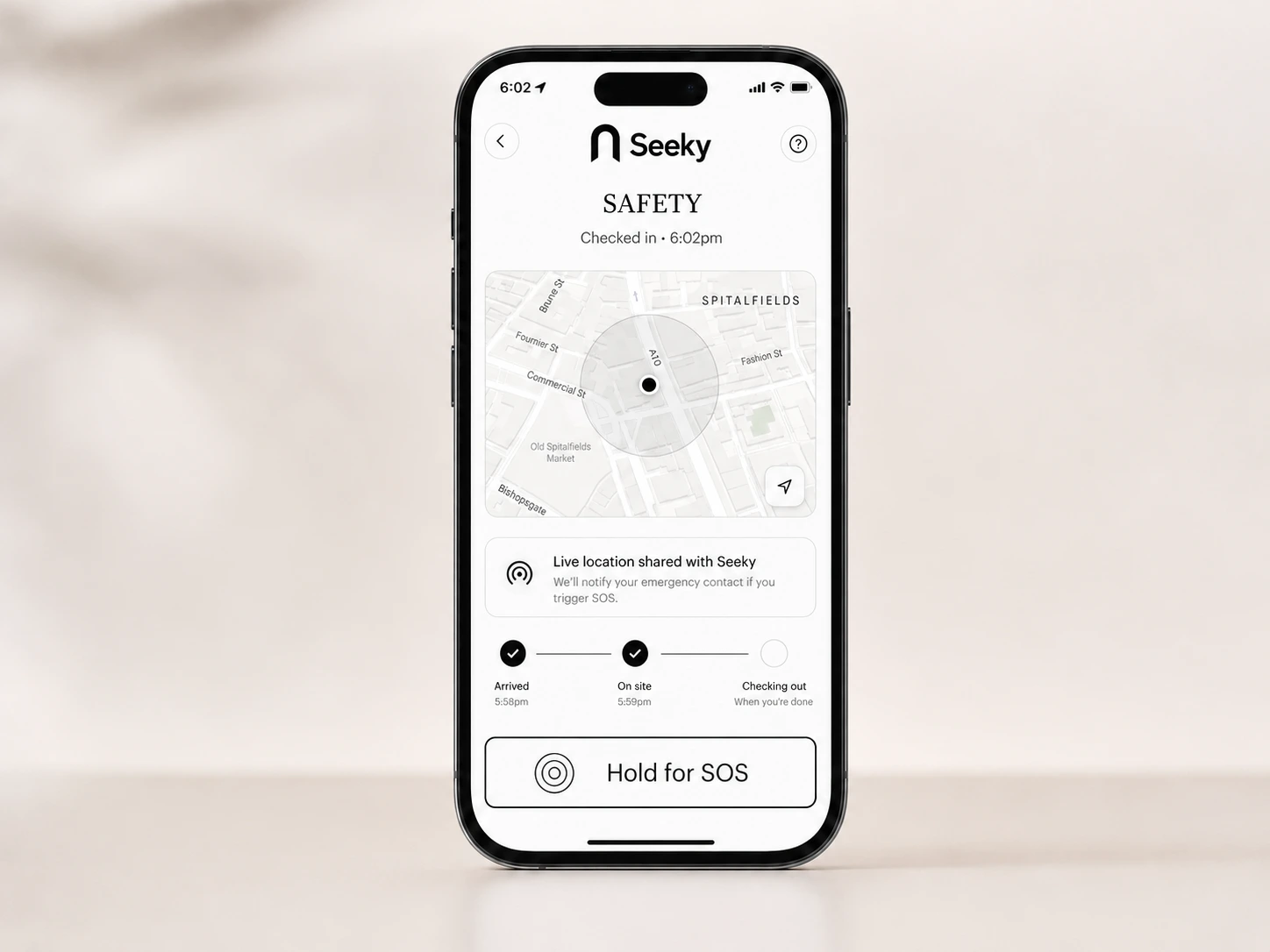
- Check-in and check-out. The worker confirms arrival and confirms they've left safely. A missed check-out automatically flags someone to follow up, so a problem is noticed in minutes, not hours.
- Live location. Knowing where a person is during the visit turns "I think they're at the Elm Road property" into a precise point on a map if help is ever needed.
- An SOS that reaches a real person. A discreet one-tap alert that escalates to someone who can respond, with the location and context already attached. Speed is everything here.
- A clear record. Who attended, when, where, and that they got out safely, logged automatically, not reconstructed afterwards.
Safety as a feature, not an afterthought
This is exactly how Seeky is built. Every Seeker is ID and right-to-work checked, hand-picked and personally vetted by our team before they can accept jobs, and every job runs through arrival check-in, live location while the visit is in progress, automatic check-out, and a hold-to-activate SOS in the Seeker app. It's not a policy stapled on afterwards. It's how the work flows by default.
The benefit cuts two ways. The person attending is genuinely protected rather than hoping for the best. And the agency meets its duty of care with an auditable trail to show for it, which matters for staff, for insurers, and for landlords who'd rather their property wasn't the site of an incident. Treating safety as a core feature is the modern way to run viewings - and it pairs naturally with proper vetting you can verify.
No one should have to weigh up whether a viewing is worth the risk. Build the controls in, use them every time, and the question never comes up. See how Seeky keeps every visit safe.
See how Seeky covers your branch
Hand-picked Seekers handle the viewings, inspections and visits you can't staff - at a price you see before you book.
Seeky for agents