

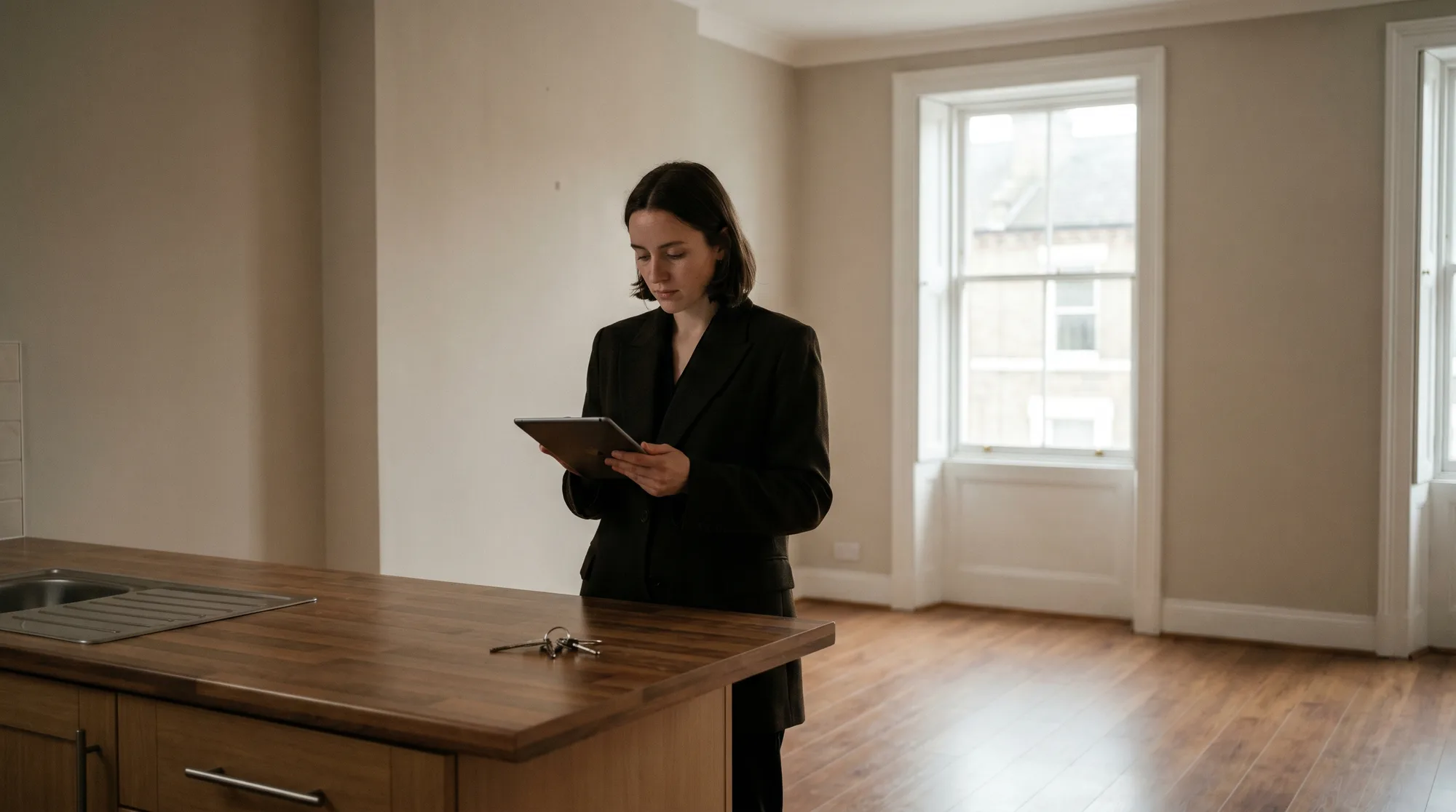
A tenancy is judged at its two ends. The check-in sets the baseline; the check-out measures against it. Everything in between - rent paid, repairs handled, a good relationship - counts for little when a deposit is contested if the bookends are sloppy. Done properly, the two reports settle almost every dispute before it starts. Done carelessly, they hand the argument to whoever has the better paperwork, which is usually the tenant.
The check-in: building the baseline
The check-in is not the moment to hand over keys and wave goodbye. It's the moment you create the record everything else will be compared to. A strong check-in does four things on the day:
- Walks the property with the tenant present where possible - agreeing condition there and then removes most "it was already like that" arguments months later.
- Records condition against the inventory room by room - confirming the report matches reality, noting anything that's changed since it was compiled, and capturing fresh timestamped photographs of any pre-existing wear.
- Captures meter readings with photo evidence - gas, electricity and water, so utility handovers and any end-of-tenancy questions are unarguable.
- Logs keys and gives the safety basics - every key, fob and remote handed over and counted, smoke and carbon monoxide alarms tested with the tenant watching, and the location of stopcock, fuse board and boiler controls pointed out.
Get the tenant's sign-off
An inventory and check-in report only carry full weight once the tenant has had a genuine chance to review and agree them. Give them the report promptly - a few days to add their own comments is reasonable - and keep a record of their agreement or any points of disagreement. A signed, or clearly acknowledged, check-in is far harder to dismiss at adjudication than one the tenant claims they never saw.
A deposit dispute is decided on the gap between two reports. If the first one is vague, the gap is whatever the tenant says it is.
The check-out: measuring like with like
The check-out only works if it mirrors the check-in. Same structure, same rooms, same order, same level of detail, so an adjudicator can lay the two side by side and see exactly what changed. Wander off-format and you lose that clean comparison - and with it, the strength of your case.
The single most important discipline is distinguishing damage from fair wear and tear. Tenants are not liable for the ordinary effects of living somewhere: lightly worn carpets, minor scuffs, faded paint after a long tenancy. They are liable for damage beyond that - burns, stains, breakages, holes, neglect. A good check-out report names the difference explicitly rather than leaving it for an adjudicator to infer, and supports each claimed deduction with a before-and-after photo pair.
Where check-outs go wrong
The failures are predictable. A check-out rushed because the next tenant moves in tomorrow. A different clerk using a different template that won't line up against the check-in. Photographs with no date that could have been taken any time. Deductions claimed without evidence, or claimed against fair wear and tear, which an adjudicator will strike out and which sour the relationship for nothing. Each of these is a self-inflicted wound, and each is avoidable with a consistent process.
Consistency is the whole game
The thread running through all of this is consistency: same format at both ends, same evidence standard, the same neutral level of detail. That's hard to guarantee when check-ins and check-outs are squeezed in around everything else a branch does, often by whoever happened to be free. Independent, on-demand cover fixes that: a hand-picked Seeker attends both ends to the same template, captures timestamped and geo-tagged media, and files matching reports to your dashboard - so the bookends always agree on format even when the tenancy ran long.
You can't predict which tenancies will end in a dispute. You can make sure every one of them is bookended by evidence that holds up. See how Seeky check-ins and check-outs work.
See how Seeky covers your branch
Hand-picked Seekers handle the viewings, inspections and visits you can't staff - at a price you see before you book.
Seeky for agents