

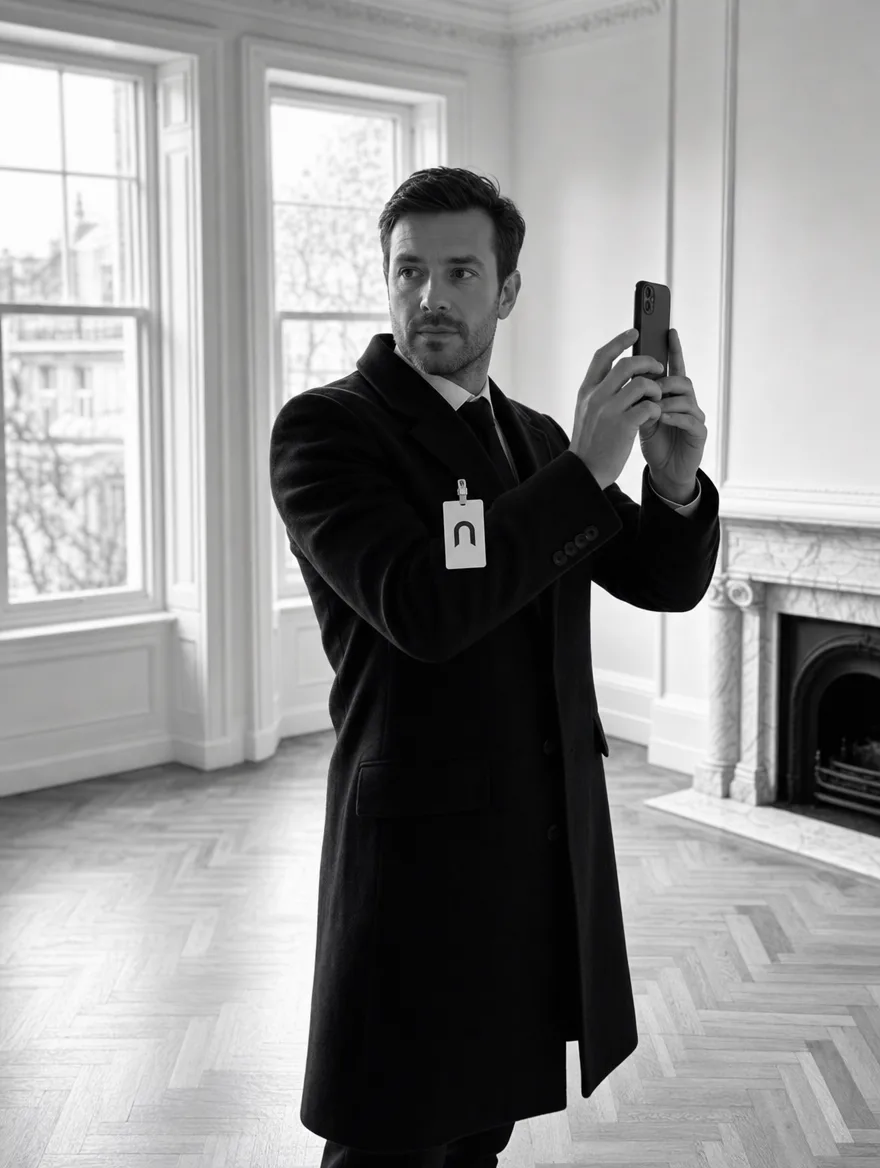
When a deposit dispute reaches adjudication, the outcome rarely hinges on who sounds more reasonable. It hinges on evidence. The party with a clear, dated, independent record of the property's condition at check-in and check-out almost always prevails - and the party without one almost always loses, however justified their case might be.
Why deposits are protected, and why that matters
Tenancy deposits in England and Wales must be held in a government-approved protection scheme, each of which offers free dispute resolution. Adjudicators are independent and decide on the balance of the documents in front of them. They don't visit the property. They don't take landlord or tenant assertions at face value. They weigh the paperwork - and if the paperwork is thin, the benefit of the doubt goes to the tenant.
That single fact reframes the inventory. It isn't an administrative chore to tick off at the start of a tenancy. It's the evidence file you'll wish you had if things go wrong eighteen months later.
What a robust inventory actually contains
A good inventory does far more than list rooms and furniture. The ones that hold up under scrutiny share a few characteristics:
- Detailed, room-by-room condition notes - not just "kitchen: good" but the specific state of walls, floors, fittings, appliances and any existing damage, in plain descriptive language.
- Timestamped, geo-tagged photography - clear images that prove when and where they were taken, so a "that mark was always there" claim can be settled in seconds.
- Meter readings - captured with photo evidence, removing a common source of friction at both ends of the tenancy.
- A matched check-out - the same structure, the same rooms, the same level of detail, so an adjudicator can compare like with like rather than guess.
An adjudicator can't see the property. They can only see your evidence. Make the evidence do the talking.
The independence question
There's a reason "independent inventory" is the phrase that matters. A report compiled by the landlord, or by the agent acting for the landlord, is easier for a tenant to challenge as partial. A report compiled by a neutral third party - present only to record what is actually there - carries more weight precisely because they have no stake in the outcome. Independence isn't a nicety. It's part of what makes the document persuasive.
Where most disputes are actually won or lost
In practice, the failures cluster in a few places. Check-in reports that are vague ("walls: fair"). Photographs with no date or location that could have been taken any time. A check-out done in a rush, in a different format, that can't be lined up against the check-in. And - most common of all - no independent inventory at all, just a few phone snaps and a hopeful memory.
Each of these is avoidable. The cost of getting it right at the start is a fraction of an unrecovered deposit deduction or a tenancy that sours over a fairness argument.
Doing it well, at scale
The reason inventories slip is the same reason everything slips in a busy branch: they take a trained person, on site, with time to do it properly - and that person is always needed somewhere else. This is exactly the kind of job on-demand cover is built for. A hand-picked Seeker attends, captures the report to a consistent template with timestamped, geo-tagged media, and returns it to your dashboard - check-in and check-out in the same format, ready to defend.
You don't get to choose whether a dispute happens. You do get to choose whether you walk into it with evidence. See how Seeky inventories work.
See how Seeky covers your branch
Hand-picked Seekers handle the viewings, inspections and visits you can't staff - at a price you see before you book.
Seeky for agents