

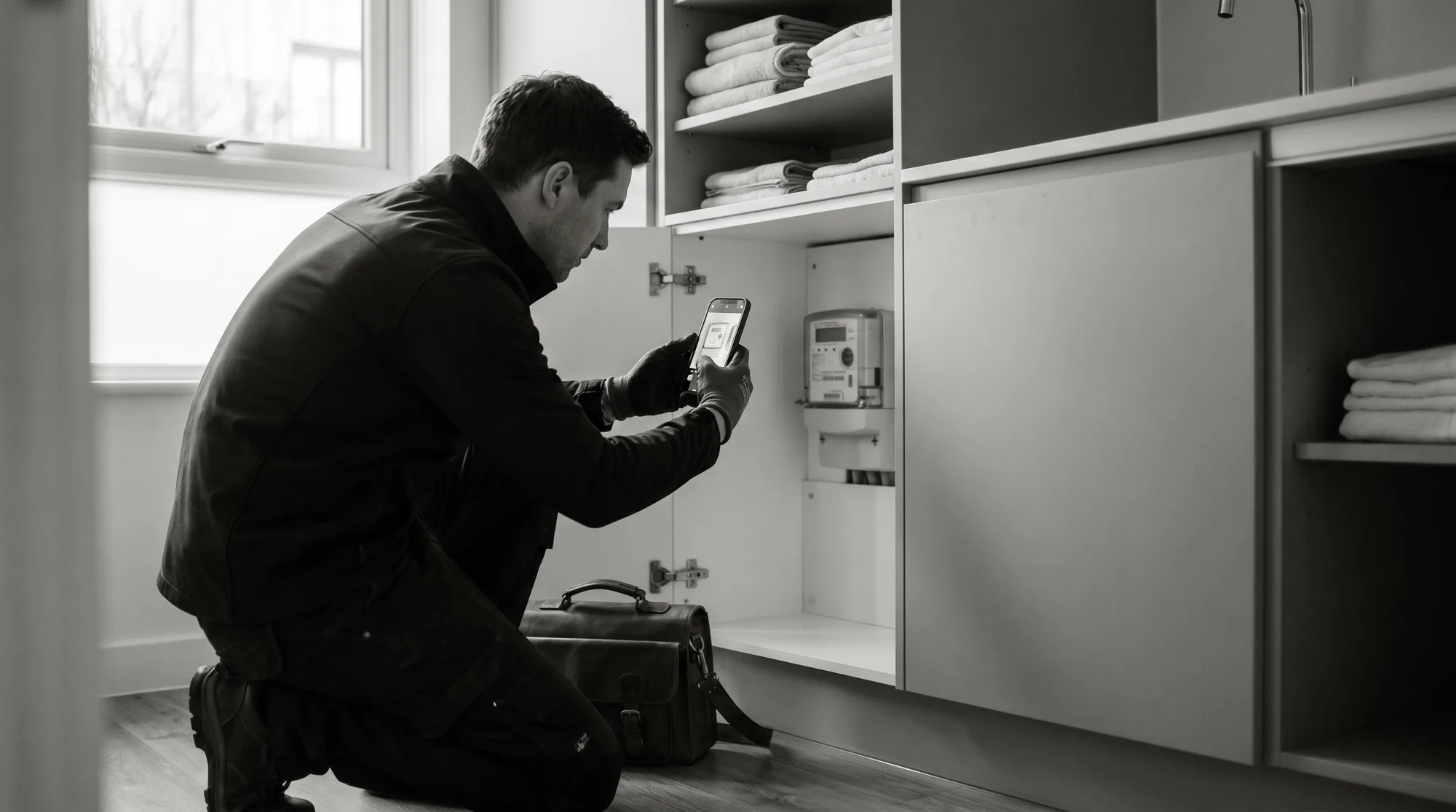
Of all the jobs in property management, the meter read is the easiest to skip and the most annoying to skip. It takes two minutes. It involves no negotiation, no styling, no difficult conversation. And precisely because it's so small, it falls off the list - until a tenant disputes a closing bill, an energy supplier estimates wildly, or a new occupant inherits someone else's consumption and the complaint lands on your desk.
The small job with an outsized tail
A meter read at the moment of a void marks a clean line: this tenancy ends here, the next begins there. Miss that line and everything downstream gets murky. Suppliers estimate, estimates are wrong, bills are contested, and someone - often the agent - spends an afternoon untangling a dispute that a two-minute photo would have prevented.
Nobody remembers the meter read that happened. Everyone remembers the closing bill that didn't add up.
Why voids are exactly when it's missed
Void day is busy. There's a check-out to run, keys to move, an inventory to update, maybe a clean and a contractor to coordinate. The meter read is the lowest-status task in a high-pressure window, so it's the one that slips. The irony is that the void is the single most important moment to capture it - it's the boundary between two parties' liability.
Make it a captured step, not a memory test
The reliable fix is to stop relying on someone remembering. Bundle the meter read into the visit that's already happening - the check-out or the void inspection - and capture it the same way everything else is captured: a timestamped, geo-tagged photo of each meter, logged against the property, delivered to the dashboard. No loose readings on a scrap of paper, no "I'm fairly sure it was around…".
- Photo evidence, not a number. A picture of the dial settles disputes a typed figure can't.
- On the visit you're already making. Added to a check-out or void inspection as a bolt-on, not a separate trip.
- Logged where it's findable. Stored against the property, timestamped, ready to hand to a supplier or tenant.
On-demand cover for the job nobody wants to make a trip for
A standalone meter read rarely justifies a dedicated trip - which is exactly why it gets skipped. On-demand cover solves that two ways: it's a low-cost bolt-on to a visit a Seeker is already making, and where a standalone read is genuinely needed, a hand-picked local person is near the property, so you're not paying for an hour's drive to read a dial. Every read is booked at a transparent price and captured with photo evidence, so the smallest job on the list stops being the one that costs you an afternoon.
The principle behind the small job
Meter reads are a useful reminder of a wider truth in property operations: the cheapest moment to capture a fact is when you're already standing in front of it. Evidence gathered on the day is worth ten reconstructions afterward. Build the small captures into the visits you're already making, and the disputes that eat your week quietly stop happening.
See how Seeky covers your branch
Hand-picked Seekers handle the viewings, inspections and visits you can't staff - at a price you see before you book.
Seeky for agents